
Where the Indus meets the Karakoram giants — turquoise lakes, cold deserts, 700-year-old forts, and the gateway to K2, all within one Balti valley.
Skardu sits where the Indus and Shigar rivers meet, ringed by the Karakoram range at roughly 2,500 metres above sea level. Once the heart of “Little Tibet,” it grew into the staging point for expeditions to K2, the Gasherbrums, and Broad Peak — four of the world’s fourteen eight-thousand-metre peaks rise within reach of this one valley.
Yet Skardu isn’t only for mountaineers. Families come for the heart-shaped Shangrila Lake, photographers chase the Katpana Cold Desert at sunset, and history lovers climb to the 16th-century Kharpocho Fort for a view over the whole valley. Balti hospitality, apricot orchards, and some of the lowest crime rates in Pakistan make it an easy place to fall for.
Skardu is the capital of Baltistan district in Gilgit-Baltistan, Pakistan a high-altitude valley (~2,500m) at the confluence of the Indus and Shigar rivers, known as the gateway to K2 and the Karakoram range, and reachable by a 1-hour flight or a 13–18 hour road trip from Islamabad.
Gateway to K2 & Baltoro Glacier treks
Cold deserts beside turquoise alpine lakes
700-year-old forts & Tibetan-rooted culture
One of Pakistan's safest tourist regions
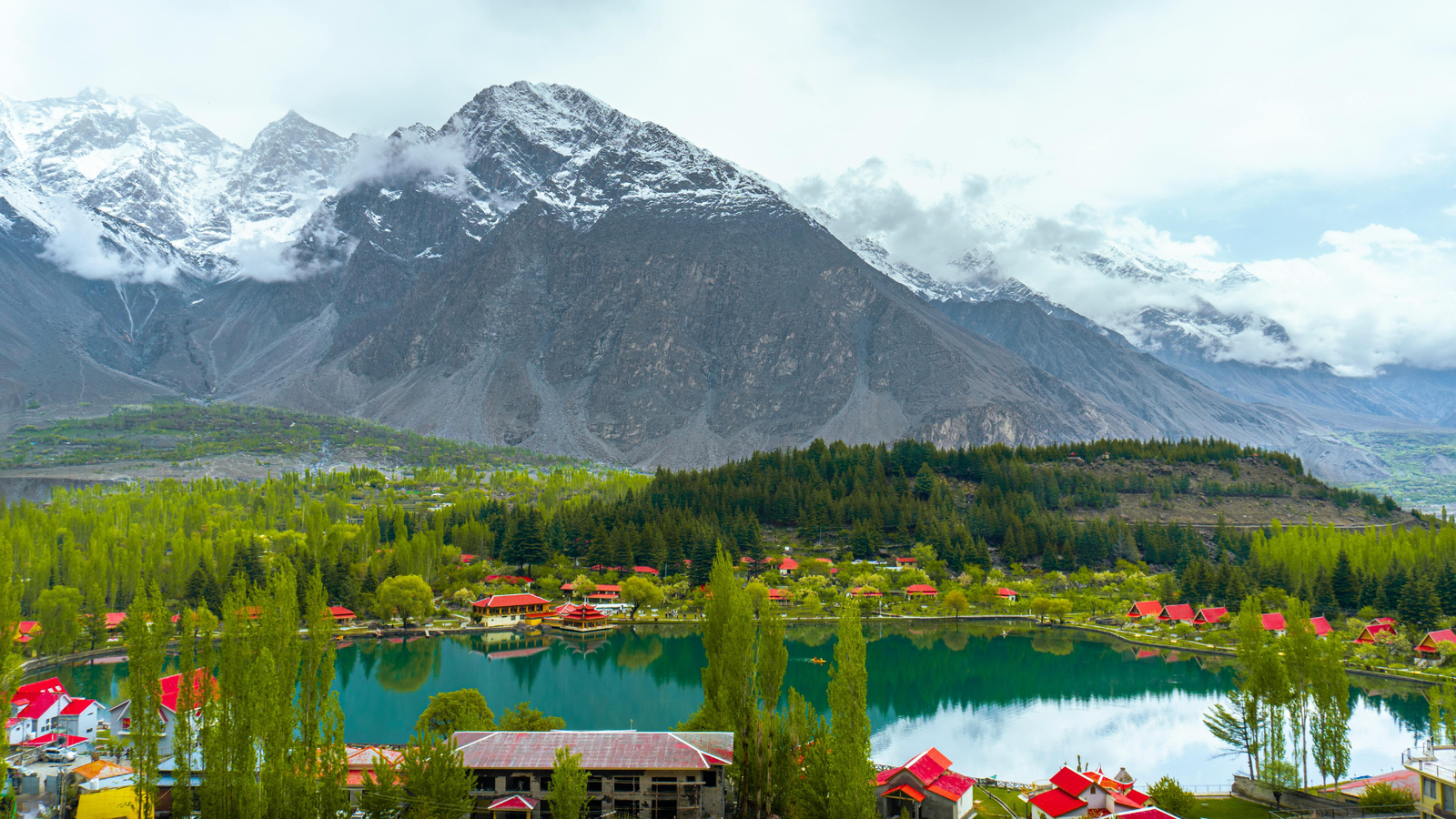
Baltistan’s Tibetan-Buddhist roots still surface in Skardu’s architecture, language, and the Balti people’s features and customs. Manthal Buddha Rock, a carved rock relief near the city, is one of the few visible reminders of this pre-Islamic past, alongside the Balti dialect that borrows heavily from Tibetan.
Every major Karakoram expedition K2, Gasherbrum I & II, Broad Peak, and the Baltoro Glacier trek to Concordia starts its logistics chain in Skardu. Trekking permits, porters, and jeep transport to Askole all route through this one town, making it the true basecamp of Pakistan’s mountaineering industry.
Long before it was a trekking hub, Skardu was the seat of the Maqpon dynasty. Kharpocho Fort, built around 1500 by King Ali Sher Khan Anchan, once guarded the valley from a hilltop above the Indus, and its ruins still offer the single best viewpoint over Skardu city today.
A modernised Skardu International Airport and a widened Karakoram Highway have cut travel time dramatically. What once took days by jeep track is now a one-hour flight or a scenic day-and-a-half drive, opening the valley to far more travellers each year.
Skardu has four distinct seasons, and each one changes what the valley has to offer. Here’s what to expect month by month.
The best time to visit Skardu is from April to October. June to September is peak season, with warm 25–30°C days, cool nights, and every route including Deosai National Park open. April–May is best for blossoms; September–October for autumn colour and fewer crowds. Avoid November–March unless you specifically want a snow-season trip.
Apricot and cherry blossoms cover the valley, especially around Shigar and Chunda. Mild days, cool evenings, and excellent light for photography. Some high-altitude roads may still be snowbound.
June–September is the busiest and most reliable window. Deosai National Park is open, all trekking routes to K2 Base Camp are accessible, and days stay warm with cool nights book flights and hotels ahead.
Poplar and orchard trees turn gold and red. Crowds thin out after mid-September, days stay clear and comfortable, and it’s widely considered the most photogenic season in Skardu.
Snow transforms the valley into a quiet, frozen landscape — lakes ice over and Deosai closes completely. Flights are frequently delayed by weather. Best suited to travellers specifically seeking a snow-season trip.
Skardu is reachable from Islamabad, Lahore, and Karachi by air, or from Islamabad by road via two scenic Karakoram Highway routes.
The fastest route is a direct 1-hour flight from Islamabad on PIA, Airblue, or AirSial (roughly 318 km air distance, subject to weather delays). By road, it’s about 620–630 km and 13–18 hours via the Karakoram Highway through Chilas and Jaglot, or via Babusar Top through Naran when that pass is open (June–October).
The quickest and most scenic option, flying directly over the Karakoram and Himalayan ranges.
A rite-of-passage drive through some of the most dramatic mountain scenery on Earth.
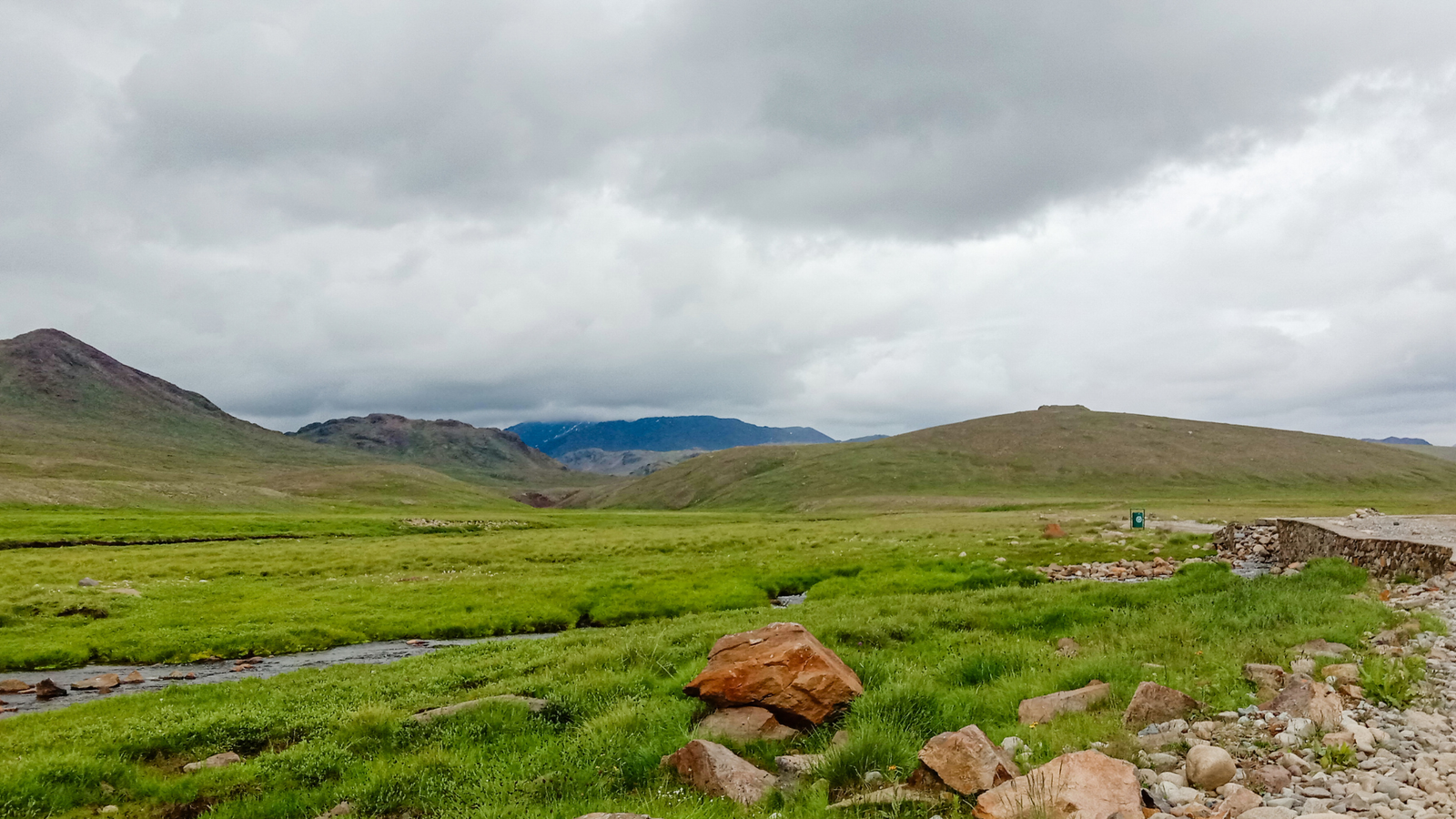
The world's second-highest plateau at 4,114m, home to the Himalayan brown bear, Sheosar Lake, and wildflower meadows that bloom every summer.
9 day package
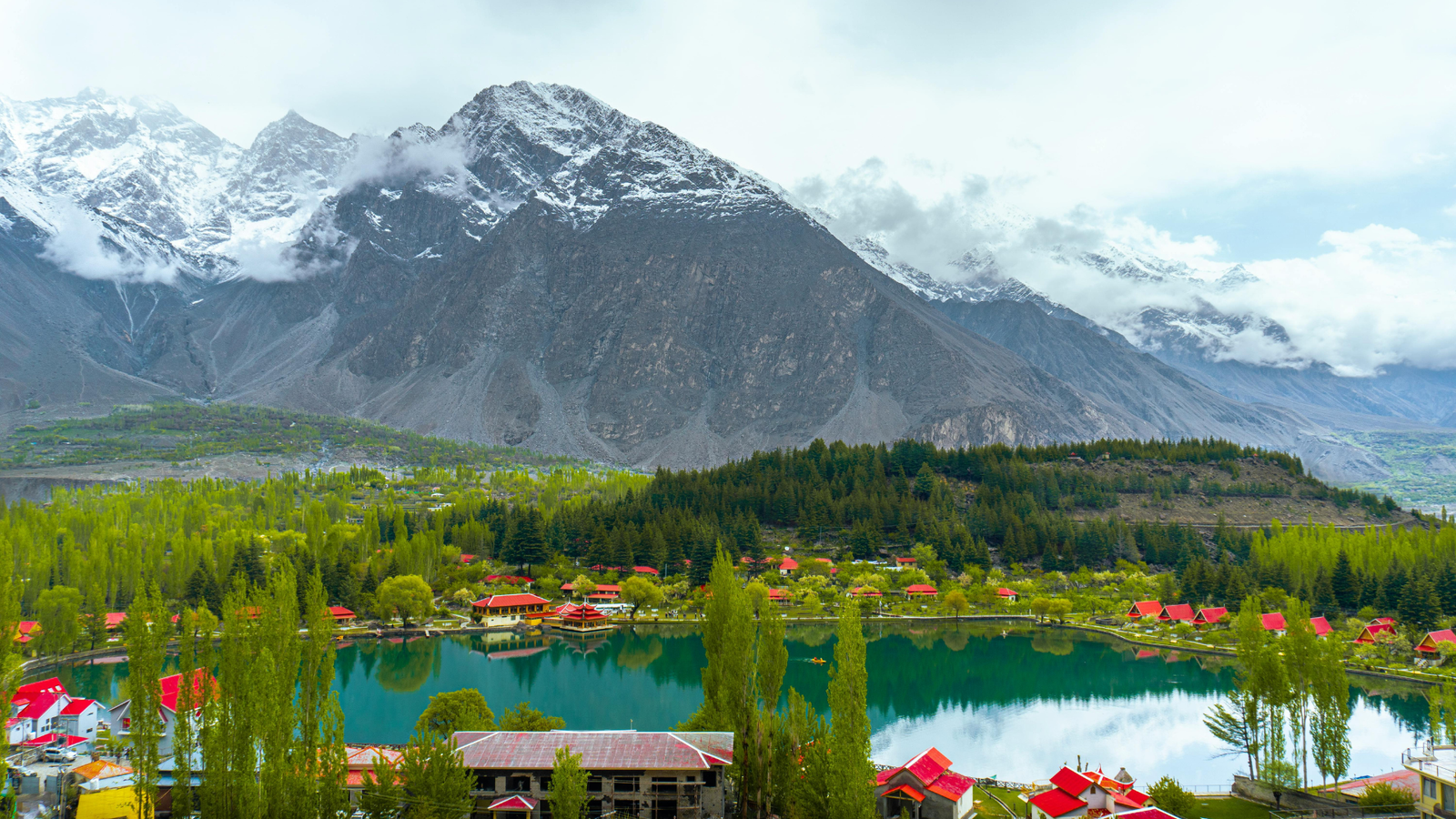
Pakistan's original "Resort in the Skies," built around a naturally heart-shaped lake with boating, lakeside cottages, and pine-framed views.
7 day package
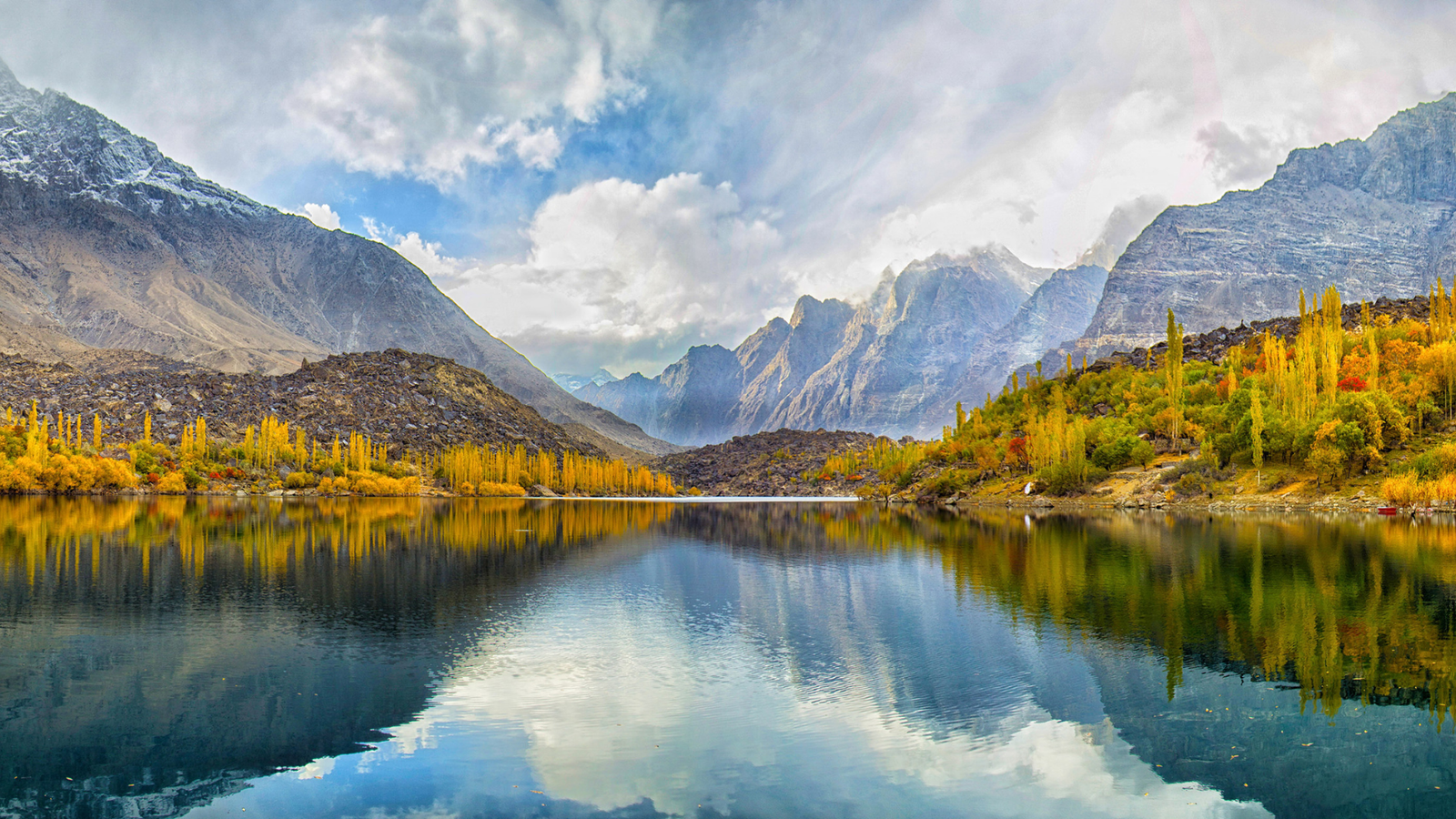
A quieter, more untouched twin to Shangrila — no hotels on its banks, just still turquoise water framed by rock and pine forest.
5 day package

We make your journey to Northern Pakistan simple, safe and unforgettable — Hunza, Skardu, Swat, Naran & Kaghan, Naltar, Murree and Azad Kashmir, planned by local, licensed guides.
+92 308 5223335
info@toursbynature.com
Office No.1, Plot No. 2-E, Chaudhary Market, I-9/4, Islamabad, Pakistan
toursbynature.com
Welcome to Tours by Nature!
Thank you for reaching out — we’re excited to help you plan your perfect journey
WhatsApp Us
Online | Privacy policy
Book Now